


What I’m Actually Using: My Summer 2026 AI Stack
TL;DR: I get asked how I keep up with AI more often than any other question. The real answer is three podcasts, a short YouTube list, and about eight tools. My model usage has moved from mostly Claude to a near-even split with ChatGPT, and Google has dropped to roughly two percent of my work. Below is the whole stack, including what I pay for.
I do a lot of keynotes and CLEs, and there’s one question I get every single time. Doesn’t matter if the room is forty family law attorneys or a hundred people at a bar association lunch. Somebody’s hand goes up near the end and it’s always some version of the same thing.
Steve, how do you keep up?
New models drop every few weeks. New tools show up every few days. Announcements that sound enormous and turn out to be nothing, and announcements that sound like nothing and turn out to change how I work. People aren’t asking me to explain AI to them. They’re asking how a person with a full calendar stays current without it eating their life.
So here’s my answer, as of today, July 29th, 2026. I’m writing this at home after an amazing weekend of wine tasting in Paso Robles, and then a couple of days in New York with clients, and a very very late night flight home.
The three podcasts I listen to every day
The AI Daily Brief from Nate Whittemore is first. Every day, without fail. I subscribe on Patreon because I want it to keep existing. What Nate does that almost nobody else does is take a genuinely complicated development in the world of AI and explain why it matters, not just what happened. That gap is the whole game.
Stratechery from Ben Thompson is second. Ben’s business analysis is the reason I keep going back. He does that thing where you read his take on a company or topic and realize you’d been thinking about it wrong for a month. He also does a longer weekly show with Andrew Sharp called Sharp Tech that I love. I happily pay for it.
Nate B. Jones is third. I’ll be honest, sometimes Nate wanders. Sometimes I’m eleven minutes in wondering where we’re headed. But his topics are consistently the most practical for advanced AI users of anyone I follow, and I’ve changed how I work more than once because of something he said around minute twenty.
Who I watch on YouTube
Two tiers. There’s the group where I watch everything they produce, and the group I really like and get to when I can.
I’m a big believer in the power of threes, and the first group happens to be three people: Riley Brown, Theo, and Matthew Berman. Riley and Theo for deep tutorials on new tech. Matt for general AI news and market sentiment. When one of them drops something, I watch it end to end.
The second group is Claire Vo, Greg Isenberg, Allie K. Miller, Joanna Stern (I loved her latest book “I Am Not a Robot”), and NetworkChuck, whose content I pay for. I catch most of it. Not all of it. That’s fine.
Where my model usage actually landed
For about a year I was, as I’ve said out loud and often, Claude-pilled. Writing, reasoning, PowerPoint, Word docs. Claude kept getting better at all of it.
Then GPT-5.6 shipped on July 9th with Sol at the top of the family, and Codex got folded into the ChatGPT desktop app on Mac and Windows. I’ve been doing more and more in the ChatGPT app ever since.
If I look at my usage today, it’s roughly 49 percent Claude, 49 percent ChatGPT, 2 percent Gemini.
I still think GPT-5.6 Sol Pro is the best model on the market for deep reasoning and analysis. Better than Fable for that specific job. Fable does remarkable lateral reasoning, the kind where it connects two things you never asked it to connect. But when I need sustained, in-depth thinking on one hard problem, 5.6 Sol Pro is hard to beat.
Where Claude still wins, and it isn’t close
Writing. Same instructions, same memory, same style guides, and I cannot get the same quality out of Sol on maximum thinking that I get out of Fable 5 or Opus 5. I’ve run this test repeatedly because I keep expecting the gap to close. It hasn’t.
Presentations, same story. I subscribe to Every, and I think Dan Shipper and his team are extraordinary. Their writing pushed me to rebuild my own presentation skill in both Claude and ChatGPT. Even with that same work applied to both, Fable 5 and Opus 5 produce better slide structure, better analysis, better diagrams, better tone. I’ve got months of side-by-side examples sitting in a folder. When I’m building presentation for clients that matter, I still start in Claude.
I try it in both anyway. Every time. I keep hoping to be wrong.
Where ChatGPT took over
Day to day, Codex is where I live now. Client work, research, analysis, structuring documents, drafting emails, building applications. I like Claude better for front-end design, no question. But for custom applications I’m actually deploying to clients, Sol has been astonishing.
The desktop app is a real part of this and I did not expect that. I was a fifteen-browser-tabs person for years. Moving between endless chats, cowork, and code in one window changed my defaults inside of a week. The way projects hold context, the in-app browser, computer use, the way connectors work, the fact that long-running jobs just run while I do something else. The latest ChatGPT desktop app is amazing.
Most of my conversations now happen in Claude Code and in Codex (at this point I’d say 80% desktop apps, 20% in terminal) rather than in a chat window at all. I’ve built custom memory systems to track everything across both. That deserves its own post, with screenshots, so I’ll do that one next.
What happened to Google
I’ve almost entirely stopped using Gemini and I’m genuinely bummed about it.
Gemini 3.1 Pro was the last frontier model they shipped and I liked it (and used it) a lot. They put out 3.5 Flash at I/O, which I was lucky enough to attend in person, then 3.6 Flash on July 21st. Both are fast and responsive and I’ll still fire off the occasional query. But 3.5 Pro keeps slipping, and a Flash-only release cadence is not a frontier strategy. The focus now is on Gemini 4 and there’s no real timeline.
Gemini Spark is the exception. I’m an Ultra subscriber and their personal agent is great. My single best use case, and I’m a little sheepish admitting it: travel planning. It’s fantastic at travel planning.
I also want to like Gemini Notebook, the product Google renamed from NotebookLM on July 16th. I just don’t have a use case that survives contact with my actual week.
The tools I can’t work without
Wispr Flow. I’m dictating most of this article using Wispr Flow. I use it all day, every day, and I now speak to my computer far more than I type. If you try one thing from this article, try this one.
Granola sits in every call I take. It captures the conversation, gives me a transcript and a summary I’d actually forward to someone, and I’ve built integrations that push all of that into my CRM and my Obsidian memory system without me touching it. Meeting notes stopped being a thing I do.
Raycast handles the rest. Shortcuts, clipboard history, snippets, launching things, small automations. It’s the tool I’d notice missing in the first ten minutes of a workday.
And then Obsidian, which is where my knowledge management (memory) genuinely lives now. Client research, article research, all of it. I use Clearly for heavy Markdown work and Camtasia for video recording, but those are situational. Wispr Flow and Granola are the two I’d fight you over.
What I pay for, and why I’m telling you
You should know what somebody has paid for before you take their recommendations.
I pay for Nate B. Jones, the AI Daily Brief on Patreon, NetworkChuck, Stratechery, Every, and SemiAnalysis. SemiAnalysis is worth calling out separately. Their insights are remarkable, and if you care about what’s happening at the hardware layer, which increasingly decides what’s possible at every layer above it, it’s the best money on this list.
None of this is sponsored. Nobody’s paying me. I’m paying them, which is the disclosure that actually matters.
What to do Monday
Don’t copy my stack. Copy the shape of it.
Pick one daily podcast and actually listen to it daily. One. The compounding is real and it costs you a commute.
Run one real task through two models this week. Same prompt, same context, same instructions. Not a benchmark, an actual piece of your work. You’ll learn more in an hour than from a month of reading comparisons.
Install a dictation tool and use it for a week. Highest-return change I’ve made in two years, and it has nothing to do with which model is winning.
Two people
I’d be leaving out the most important part if I stopped at software.
Two people I want to name, first names only: Lauren and John. We went to business school together at Wharton. For several years now - they’ve been beyond regular friends and colleagues - they’ve been the people who push my thinking when it needs pushing on AI. Every. Single. Day. Half of what I believe about this stuff, I believe because one of them made me think about it first.
The tools turn over every six weeks. That part doesn’t.
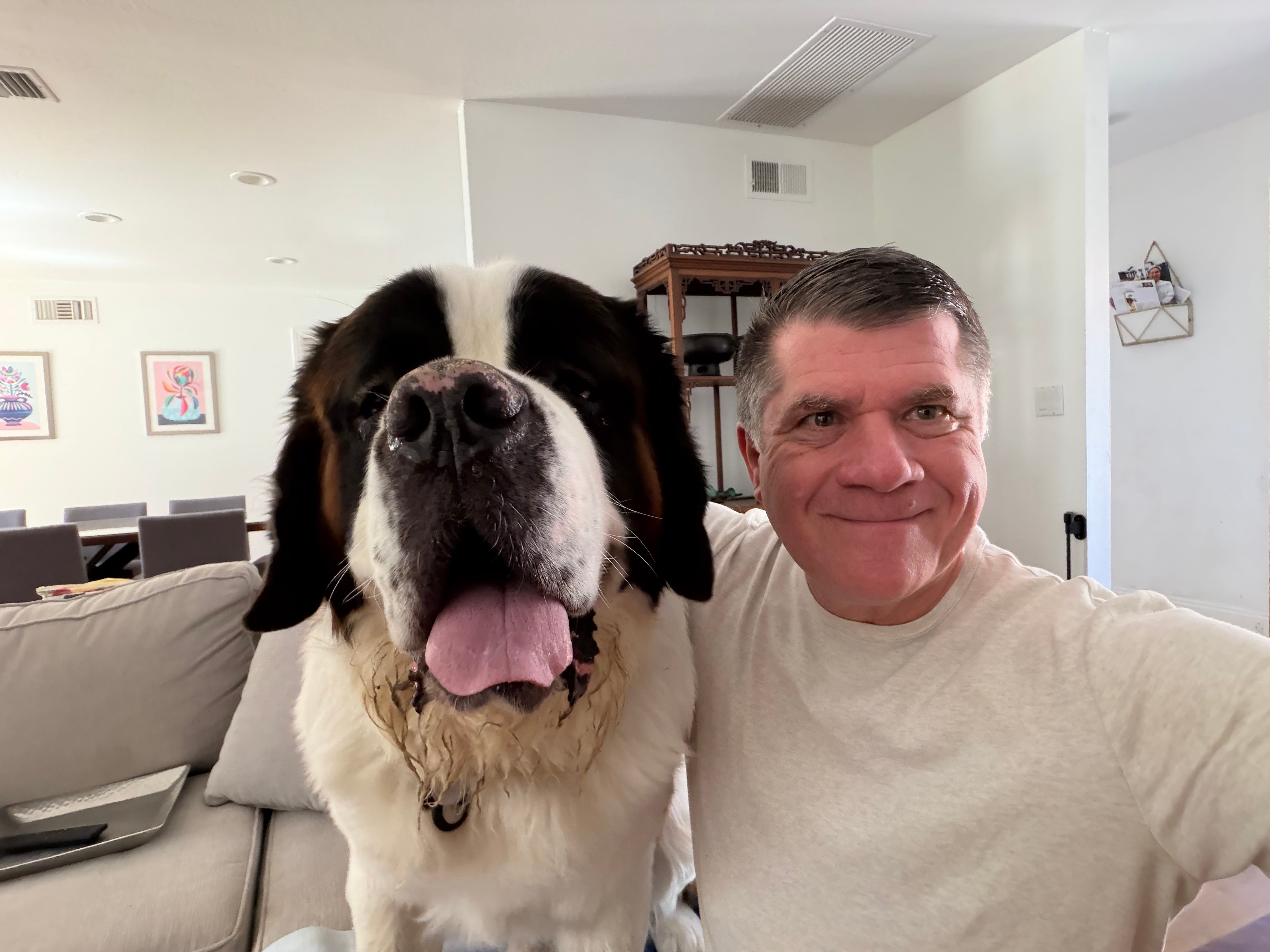
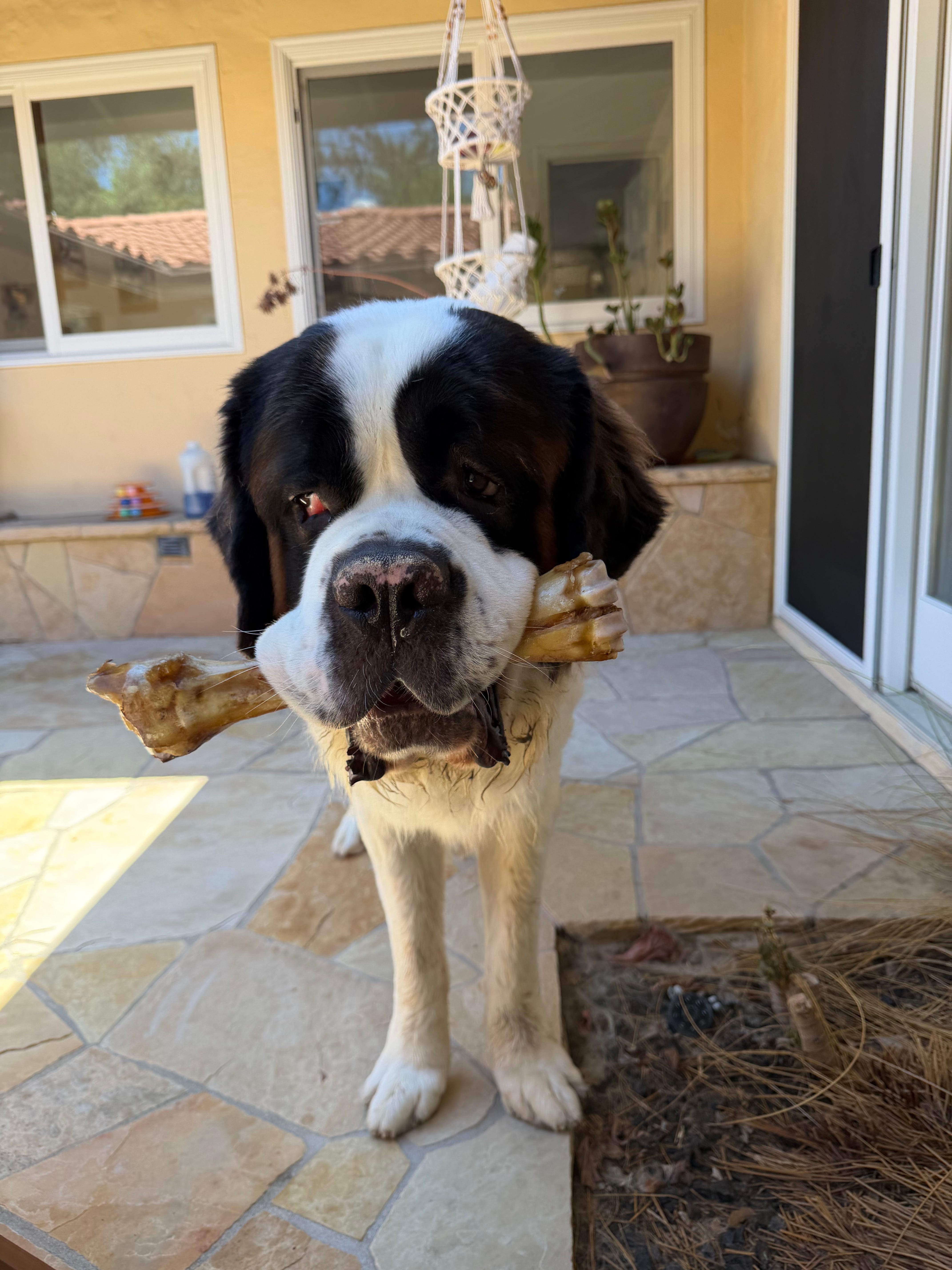
PS: After traveling for almost 6 days, Magnus hasn’t left my side. Here are two photos from earlier today. Enjoy.
The two things Claude keeps winning have something in common: neither has a scoreboard. Reasoning and coding are benchmarked publicly, so effort concentrates there and the field converges. Writing and slide structure are judged on preference, which means no lab can prove it closed the gap and no buyer can prove it didn't. That's why your folder of side-by-side examples is doing work no evaluation suite currently does, and why the difference is likely to outlast the ones that are measured.
Give that good doggo some head scratches.