

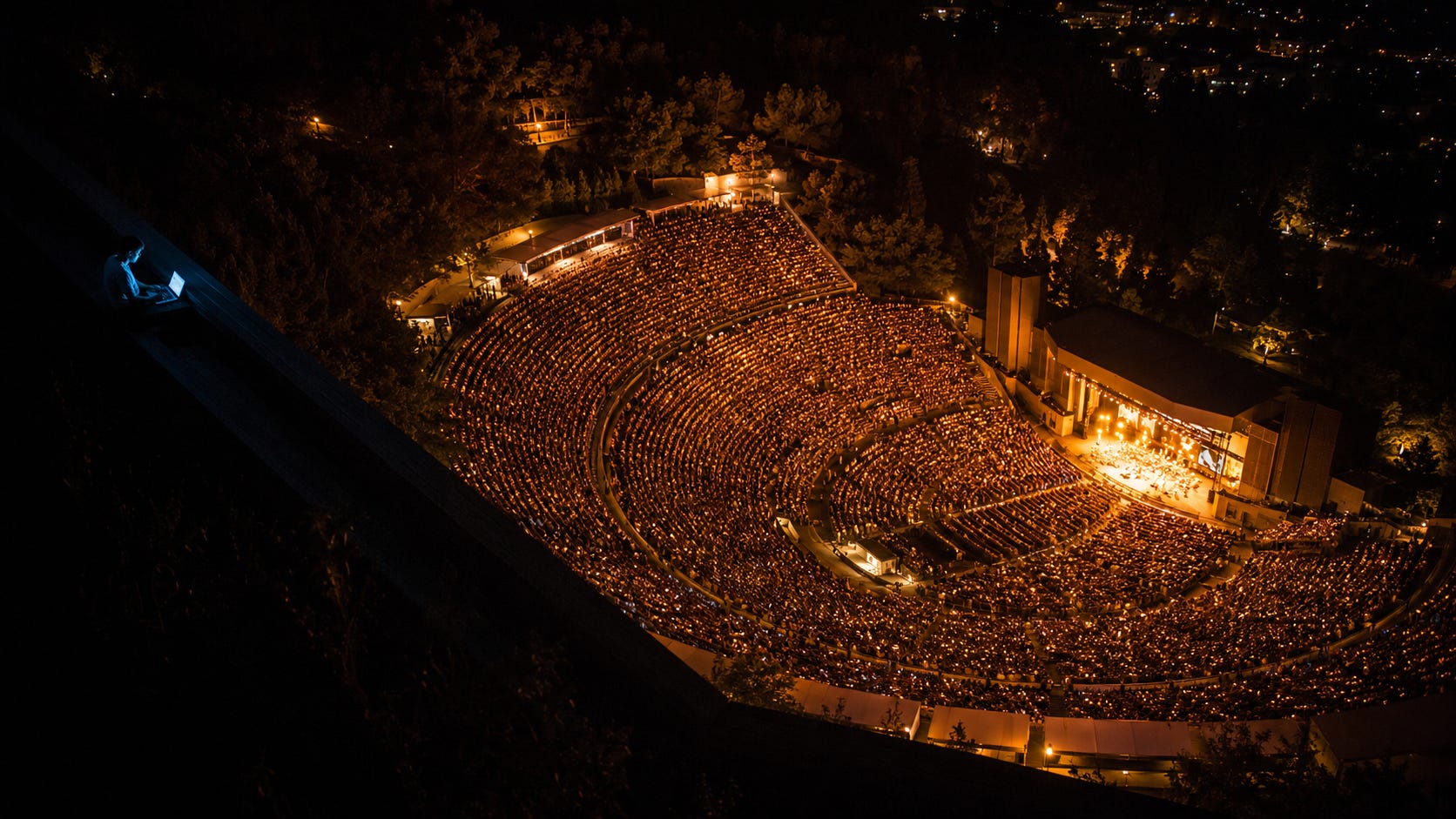
The Hollywood Bowl and the Dawning of a New Age
I almost skipped it tonight and I’m really glad that I didn’t. There was a draft I wanted to finish, and the desk has this gravity to it where one more hour always sounds reasonable. I went to the Hollywood Bowl instead. For about two hours I didn’t think about work at all, which almost never happens to me these days, because my whole week is AI and there’s a low hum of it running in my head pretty much all the time. Two amazing hours with good friend, drinking wine, and listening to Tchaikovsky and Beethoven.
I keep a list, mostly in my head, of things I should do more of. This has been on it for a while. Live music. I love it when I go.
Two articles had been sitting with me all day. First one was Hassabis. He runs Google DeepMind and he’s a Nobel laureate. Not somebody who normally reaches for hype. This morning he put out a long piece calling this a turning point in human history, and saying real AGI, a machine that does the full range of what a brain does, is probably only a few years off. He also drops in, almost in passing, that we’ve basically worked out how to make sand think. The comparison he reaches for isn’t the internet. It’s fire.
The second one was shorter. A statement out of Stanford Lab, four sentences, under a hundred words. What makes it land is the names underneath: more than 200 economists and researchers, sixteen Nobel laureates, the chief economists at Anthropic and OpenAI. Short version, AI could hit the economy about as hard as the Industrial Revolution did, only a lot faster, so we’d better start dealing with it now and not later.
The part that stuck with me was two of those signatures. Acemoglu and Simon Johnson. Those two spent years being the calm ones, the economists telling everybody the job-loss panic was overblown. Now their names are on the warning. That lands harder for me than the forecast does. When the people who wrote the case for relax go quiet and switch sides, that’s the tell.
So that’s what I carried to my seat. Didn’t matter. The music started and the whole thing went quiet for a while, which was sort of the point of leaving the house.
It came back to me later, in the car. Both of those documents, for all the weight they carry, keep pointing at the same place without meaning to. Hassabis, the guy who just announced he’s built thinking sand, spends real time in his piece on human creativity, and says that’s the reason he does any of it. And the Stanford letter, under all the alarm, isn’t asking anyone to quit building. What it wants is an economy where the machines complement people instead of replacing them. Complement. The loudest voices from the side you’d assume is most all-in, and they keep landing on us. Or maybe that’s just the thing I wanted to see, sitting where I was sitting. I went back and forth on it the whole drive. It stuck anyway.
That’s what the Bowl was, though. No screens. A few thousand people who could’ve stayed home with a TV and didn’t, sitting in the dark while a handful of others made something live, right in front of everybody, the way people have basically always done it. I don’t know how to say it any better than that. It got to me more than it probably should have. People, art, music.
And here’s the part that nags. The people going hardest at this stuff, the early adopters, the ones reading AI manifestos on a Monday night instead of being outside. That’s my crowd. That’s me. We’re the worst at doing what I did tonight. We keep telling ourselves we’ll be present later, once we’ve caught up, after the next launch. There is no after. The frontier doesn’t pull over.
Hassabis wrote one line that reads different tonight than it did this morning. He said we need to give ourselves time and space to get this next step right. This morning that was a policy point. Tonight it’s the whole game. A night at the Bowl is time and space. So is a dinner where nobody reaches for a phone.
I’m not going to pretend the tech doesn’t matter. It matters a lot, and I’ll be at the desk early tomorrow helping firms get ready for the exact thing those two documents describe, because falling behind is real. But nobody’s building a standards body for the other failure. You can do all of this right inside your own firm. Automate the grunt work, get faster and sharper than you figured you ever would. And end up hollowed out anyway. The first thing that goes, and it goes quiet, is whatever it is that let you sit in a crowd tonight and not want anything else. We get better at everything, a little worse at just being somewhere, and nobody actually decides on that trade. It happens to you while you’re busy.
The Stanford letter is titled “We Must Act Now.” Fine. I doubt a concert is what sixteen Nobel laureates had in mind. It’s what I did. Left the desk, sat with a few thousand strangers while people made music, and for two hours the smartest thing in Los Angeles was the plain human kind of intelligence, doing what it’s always done.
That’ll still be true after the sand learns to think. Somebody just has to remember to go.